Where Kenya stands
According to WASREB's Impact 18 report for 2024/25, non-revenue water rose from 44 to 48 per cent nationally. Counting only the losses above the acceptable level of 25 per cent, the sector lost about KES 13.7 billion. Kenya's Vision 2030 goal is to bring non-revenue water below 25 per cent.
The three kinds of loss
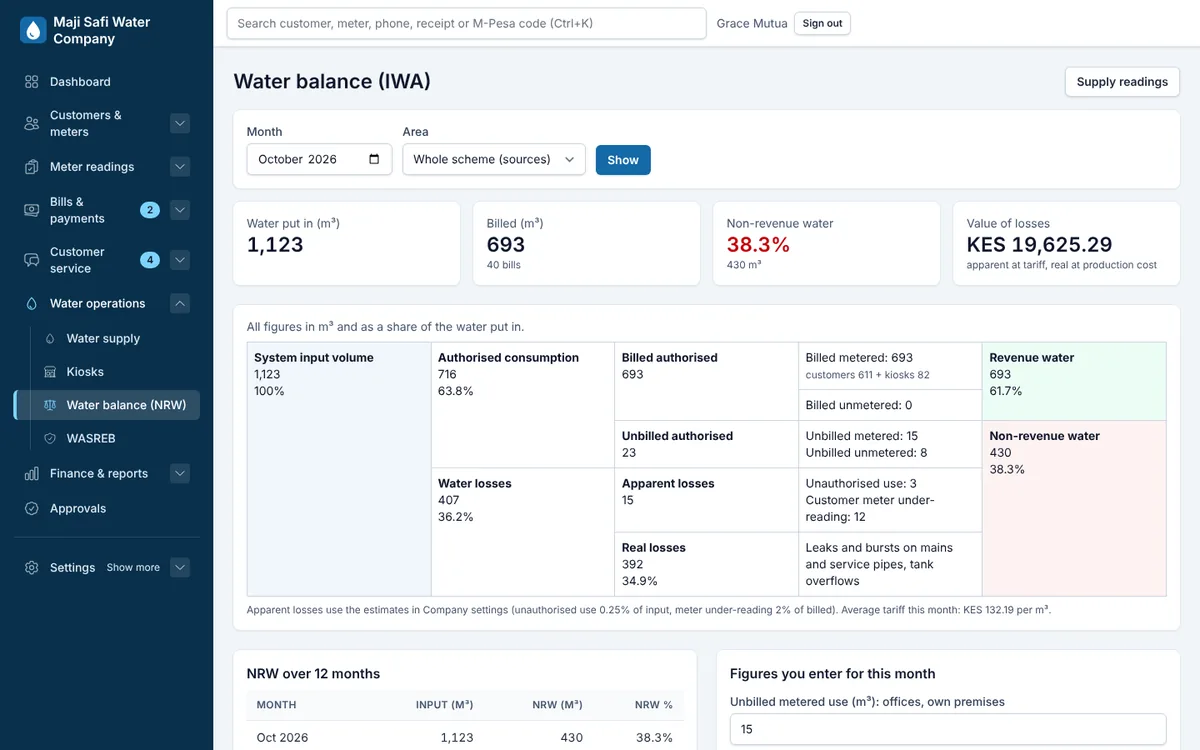
The International Water Association's water balance splits non-revenue water into three parts, and each has a different fix:
- Real losses: leaks and bursts on mains and service pipes, and tank overflows
- Apparent losses: meters that under-read, illegal connections and data errors
- Unbilled authorised use: water used legitimately but not billed, such as your own offices or firefighting
What your billing data can tell you
Apparent losses hide in billing records: meters that read the same month after month, accounts billed on estimates for too long, connections with no meter, and customers whose use suddenly drops. A billing system that flags these every month gives the field team a ready list.
- Stuck and zero-consumption meters
- Long-running estimated readings
- Sudden drops in consumption
- Unbilled meters by zone
Measure it every month
You cannot reduce what you do not measure. Record the water put into supply from production and bulk meters, compare it with water billed, and track the gap by zone. Tiririka's water balance does this from your supply readings and bills, so the trend is visible to management and the board.
Sources: WASREB: Impact reports on the performance of Kenya's water services sector
Common questions
- What is a good level of non-revenue water?
- Kenya's acceptable level used by WASREB is 25 per cent, and the Vision 2030 goal is to get below it.
- Can software alone reduce non-revenue water?
- No. Fixing leaks and replacing meters is field work. Software shows you where to send the field team and whether the work is paying off.